

Wesley Chapel Today — The Pioneers
Episode 3, Part 3 (1947–2017)
Article type: Story
From Pasco County’s early driver’s licenses and service in World War II to the preservation of their family’s 1894 home, Ruth Smith Adams and William “Bill” Rollie Smith helped ensure that modern Wesley Chapel never forgot its roots.
WESLEY CHAPEL, FL — Roads can be widened, pinewoods cleared and pastureland turned into neighborhoods almost overnight. What takes real effort to keep intact is the memory of what stood there first.
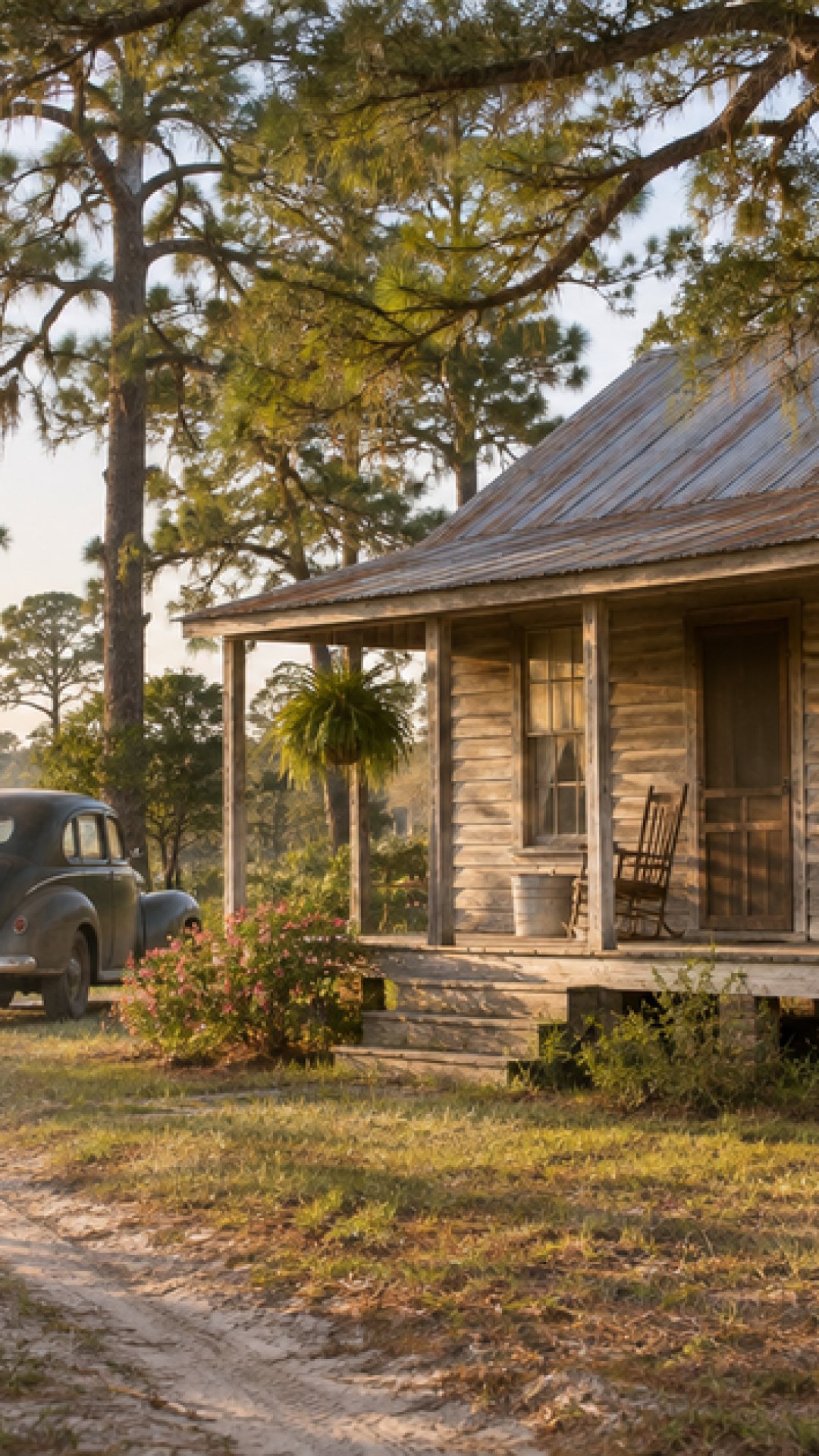
By the late 1940s, the fourth generation of the Smith family was stepping into a Wesley Chapel very different from the frontier settlement William Riley Smith had reached in 1867. Electric lines were beginning to reach rural homesteads, paved highways were replacing sand trails and the wider world was no longer a day’s wagon ride away.
For Ruth Smith Adams and her brother, William “Bill” Rollie Smith, growing up between two eras gave them a rare vantage point. They lived through the work of the old rural economy and then spent decades preserving its stories, documents and physical landmarks so future residents could still see where the community began.
Ruth Smith Adams and the Dawn of the Automobile Age
In 1940, when Florida began issuing driver’s licenses, Ruth Smith was 17 years old. Working at the county courthouse in Dade City, she helped prepare some of Pasco County’s earliest licenses on a typewriter, including those for her own parents.
It was an everyday courthouse task, but it captured a generational crossing. The descendants of pioneers who had traveled sand trails by wagon were now helping document the new age of paved roads and automobiles.
As Wesley Chapel grew around her, Ruth did not let the earlier world fade into folklore. She kept photographs, family records and childhood recollections, sharing them with local historians and writers so the names behind Wesley Chapel’s early schools, churches and homesteads could remain accurate and alive.
From a Zephyrhills Movie Theater to the Pacific
Her brother, William “Bill” Rollie Smith, born Nov. 15, 1925, grew up during the lean years of the Great Depression. In handwritten memoirs recorded in 2004, Bill remembered a childhood shaped by farm chores, open-range livestock and making do with what the land provided.
Everything changed on Dec. 7, 1941. Bill was 16 years old and leaving a movie theater in nearby Zephyrhills when word spread that Pearl Harbor had been attacked. He later joined the U.S. Army and served in the Philippines during World War II.
After the war, Bill worked aboard cargo ships, along the Atlantic Coast Line Railroad and on the family’s agricultural land. Yet no matter how far he traveled, Wesley Chapel remained his anchor.
Saving the 1894 Home for Future Generations
As subdivisions and highways began transforming Pasco County in the late twentieth century, wooden pioneer structures across Florida were disappearing rapidly.
In 1979, Willie Smith, a grandson of Daniel and Elizabeth, donated the family’s 1894 wooden house so it could be relocated and preserved at Cracker Country, the living-history museum at the Florida State Fairgrounds.
Today, visitors walking through its rooms can still see the hand-built simplicity of a home raised by neighbors in three days: a tangible reminder of what life looked like long before Wesley Chapel had shopping centers, traffic signals or master-planned communities.
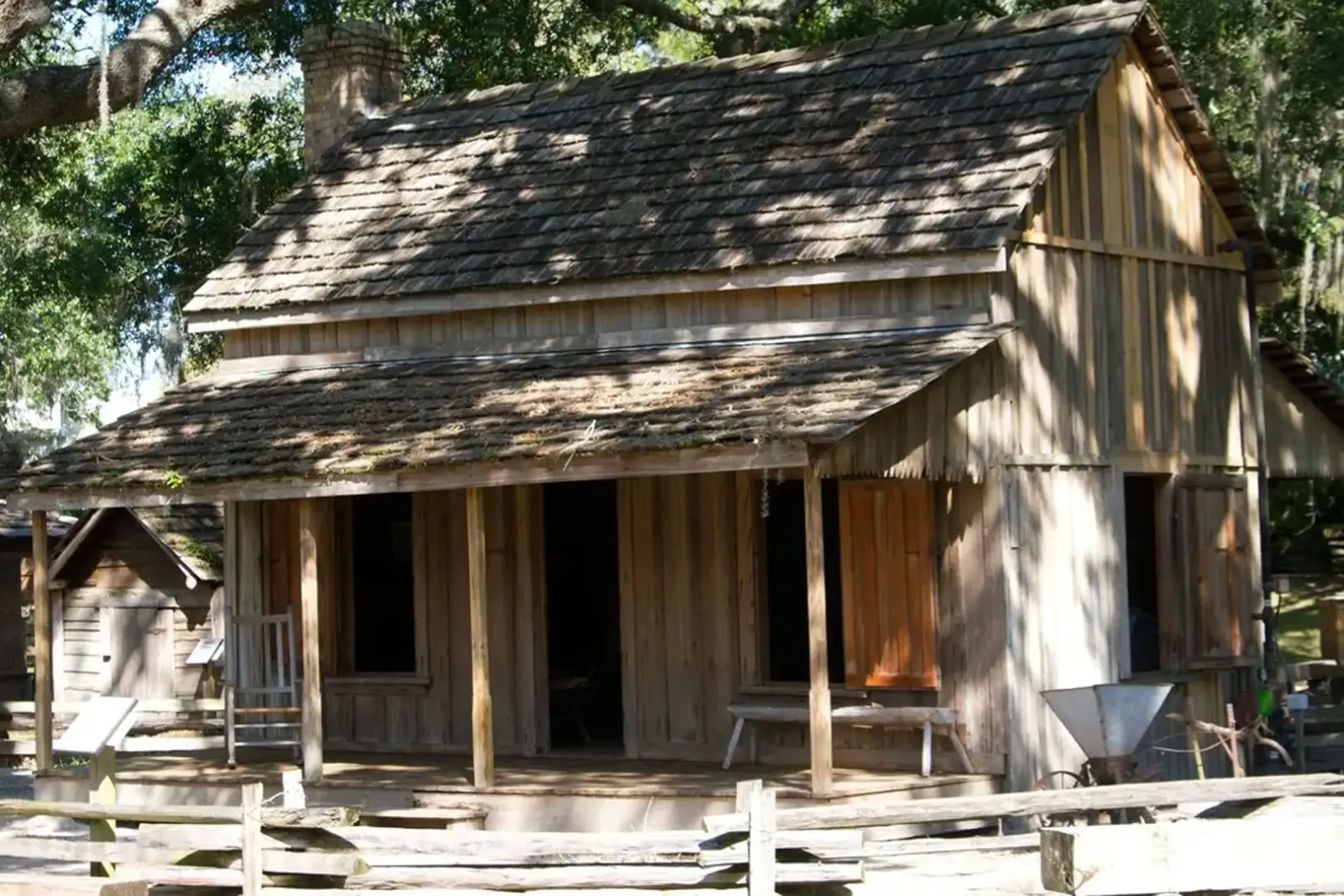
Visit the original Smith House — The 1894 home is preserved at Cracker Country Living History Museum, at the Florida State Fairgrounds. Check the museum’s visitor schedule before traveling.
- Address: 4800 US Highway 301 North, Tampa, FL 33610
- Get directions on Google Maps
- Visitor information
A Legacy Recognized Across Generations
In his later years, Bill Smith put pen to paper to record what photographs alone could not show: the sound of pinewoods at dawn, the rhythm of open-range cattle drives and the resilience of neighbors who depended on one another to survive.
On June 7, 2016, the Pasco County Board of County Commissioners passed Resolution CAO16-5156 honoring Bill Smith and Ruth Smith Adams. The recognition marked a family legacy reaching back nearly 150 years to William Riley Smith’s arrival in 1867.
Ruth and Bill both died in 2017, closing a remarkable chapter of living memory. But the records they shared, the stories Bill wrote down and the house their family helped preserve gave later generations a way back to Wesley Chapel’s beginnings.
What makes the Smith story endure is not simply how early the family arrived, but how consistently its members showed up.
William helped organize the first school. Daniel and Elizabeth built a home with their neighbors’ hands. Luther helped bring electric light down country roads. Ruth and Bill made sure the memory of all of it survived into the twenty-first century.
Next in The Pioneers — Episode 4: “The Stanleys” explores another founding family whose story weaves directly into the Smiths’ through Louneta Stanley and the homesteads that helped shape early Wesley Chapel.
Read More in the Series
- The Pioneers — Episode 1: Introduction to the Pioneers
- The Pioneers — Episode 2: The Boyettes
- The Pioneers — Episode 3, Part 1: The Smiths: Where It All Began (1867–1894)
- The Pioneers — Episode 3, Part 2: The Smiths: Building More Than a Home (1894–1947)
- The Secret of Wesley Chapel, Part 2: An 1894 Home Holds a Clue to Belonging
| Nº | Sources |
|---|---|
| 1 | Pasco County Board of County Commissioners Resolution CAO16-5156, reproduced by Fivay · fivay.org |
| 2 | Cracker Country historical archives — Smith House · crackercountry.org |
| 3 | The Laker/Lutz News — family history recollections · lakerlutznews.com |
| 4 | U.S. Postal Service historical postmaster records · about.usps.com |