

They arrived on horseback and in ox-drawn wagons, carrying little more than iron tools, seeds wrapped in cloth sacks, and the determination to start over. Between the 1840s and the 1880s, families such as the Boyettes, Godwins, Ryals, Kerseys, Mendenhalls, Smiths, Gilletts, and Stanleys put down roots in an isolated stretch of inland Florida, long before it had official boundaries or an urban center.
Many of these early settlers came from farming and livestock-raising families across the American South. Some traveled from Georgia, the Carolinas, and other parts of Florida, drawn by the chance to claim land and build a different life. Settlement opportunities under laws such as the Armed Occupation Act of 1842, followed by other ways of acquiring property, helped populate remote parts of the state. But no law could guarantee that a family would survive its first summer, the next drought, or a failed harvest.
They found pine forests, open fields, sandy rises, and waterways winding through the woods. The streams of Double Branch and the Cypress Creek watershed offered water and natural landmarks to anyone deciding where to build, plant, or drive livestock. The land promised opportunity, but demanded labor before offering anything in return.
Homesteads stood miles apart, linked by loose sandy trails that could become mud after summer storms. The Boyettes, Godwins, and other pioneer families established properties in different parts of the region. There were no road signs, and visiting a neighbor might take much of the day. Travelers relied on the sun, trees, creeks, and wagon ruts to find their way.

Historic road near Eastpoint, Florida, circa 1898–1912. Historical reference image only; not Wesley Chapel. State Library and Archives of Florida / Florida Memory — public domain.
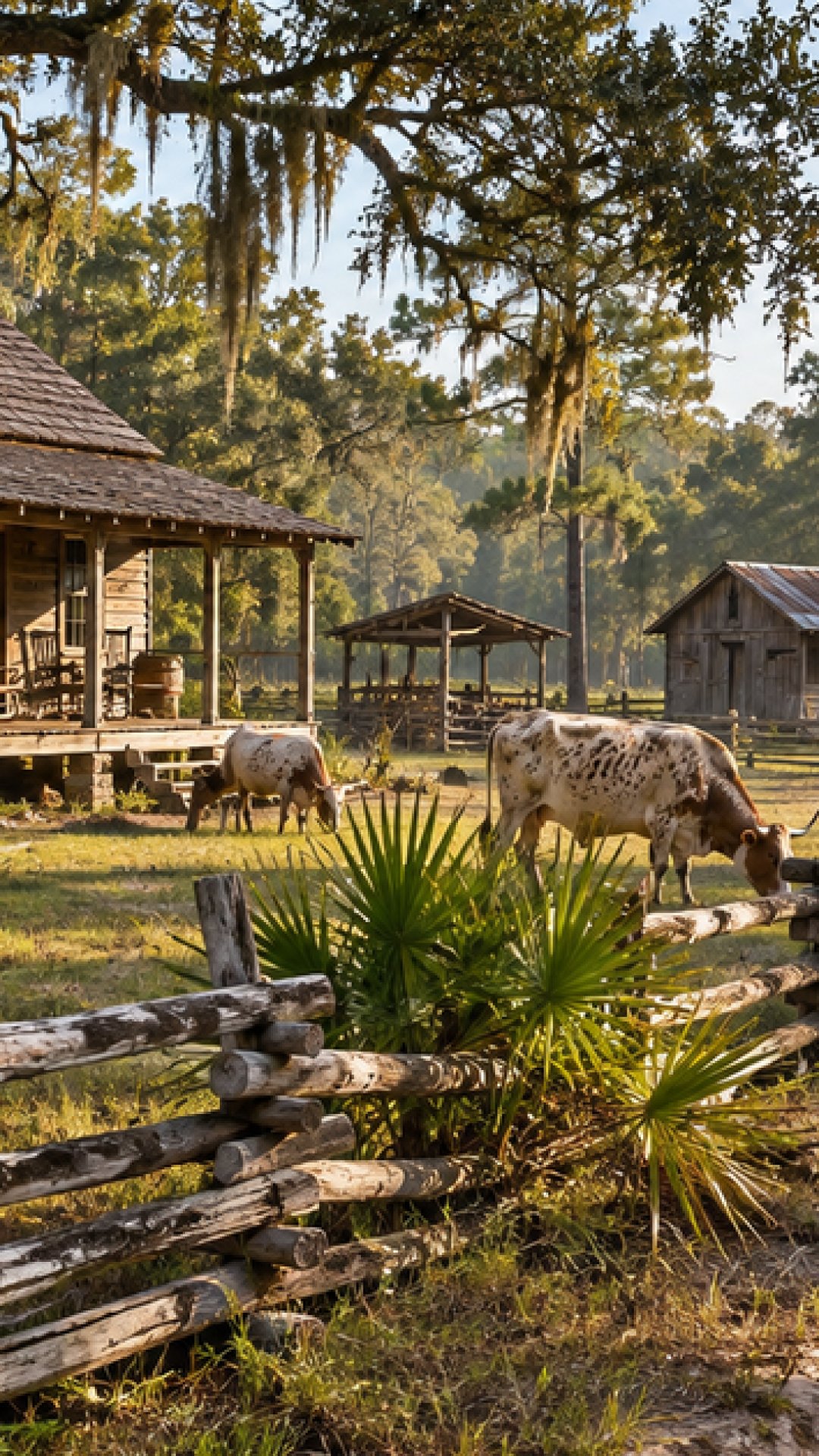
Homes were modest and built mostly from materials at hand. Pine boards, logs, simple roofs, and porches shaped the rural houses. Raised floors in some buildings let air circulate and kept wood above damp ground. Open windows admitted breezes and mosquitoes alike; wooden shutters provided some protection from storms. Comfort depended more on shade, ventilation, and family ingenuity than on anything bought elsewhere.

Historic pioneer farmstead in northern Florida. Historical reference image only; not Wesley Chapel. Historic American Buildings Survey / U.S. federal government — public domain.
Work began before sunrise and followed the land's demands. Cattle raising was part of rural Florida's economy, using hardy animals descended from herds introduced by the Spanish centuries earlier. Florida Cracker cattle could roam open range and woodland before mounted riders gathered them with long whips. The sharp cracks were part of the soundscape of old cattle country.

Angus cattle in a Florida pasture, 1929. Historical reference image only; not Wesley Chapel. Florida Memory — public domain.
The pines offered another livelihood. Collecting resin for turpentine and rosin became important in parts of Florida, while sawn timber supplied buildings and trade. On higher, better-drained ground, farmers grew food for their families, and citrus groves later joined the agricultural economy as the area developed.
The work was hard, repetitive, and largely done by hand. Fields had to be cleared before planting. A fence meant cutting, hauling, and setting wood. Animals needed tending even in relentless rain. And when a tool broke, there was not always a replacement waiting.
In the kitchen, almost nothing arrived ready-made; every yard was a living pantry. Ground corn for bread and grits, sweet potatoes, cowpeas, and other local crops sustained families. Sugarcane could be crushed in simple mills, often powered by animals, and its juice boiled down into syrup.
Chickens scratched around the houses, while hogs provided meat that could be salted or smoked for storage. Fishing in creeks and ponds, and hunting, supplemented many rural diets. Coffee, salt, tools, and other necessities not made at home had to come from larger settlements along difficult routes.
A supply trip required planning. Nobody simply stepped out for a few minutes and returned before lunch. Animals had to be prepared, goods set aside for sale or barter, and road conditions considered. A sudden storm could delay the return; a broken wheel could turn the journey into a long wait beside the trail.
Although separated by miles of woods, the pioneers built a shared life around the few gathering places they raised themselves. Churches, small schools, and neighborly meetings helped connect families who spent most weekdays working on their own land.
When a house needed building or repairs were required, neighbors could make all the difference. Several families might gather to raise walls, cut lumber, or finish work that would take one person weeks. Shared food on makeshift tables, conversation, and perhaps music turned the labor into a gathering.
The small Methodist chapel associated with the name Wesley Chapel and Double Branch Baptist Church, organized in 1878, helped shape the area's religious and communal life. Services brought together people living far apart. Adults discussed crops, rain, animals, and roads while children played among the trees and sandy clearings.
We can imagine boys running barefoot, competing to climb a pine tree or cross a shallow creek without soaking their clothes. Girls also joined games, household chores, and responsibilities that began early for rural children. Handmade dolls, tops, and other small toys could fill whatever free hours remained.
Childhood held moments of play, but it was never separate from family duties. Fetching water, feeding animals, collecting firewood, and helping in the fields could be daily tasks. School, when available, had to fit around farm work and difficult journeys.
There were difficult times too, the ones rarely preserved in cheerful stories. Illness, accidents, droughts, and storms could strike without warning. Distance from doctors and trading centers made life less certain. Sometimes a neighbor's help was the only resource until someone could reach a larger community.
Years passed, children grew up, new families formed, and land passed from parents to children and grandchildren. Horse and wagon trails became familiar routes. Churches gained importance, schools brought generations together, and pioneer surnames entered local memory.
From hard work, daily improvisation, and solidarity among neighbors came the ties that kept these families rooted in this land, generation after generation.
| Nº | Sources |
|---|---|
| 1 | West Pasco Historical Society — Wesley Chapel · westpascomuseum.org |
| 2 | History of Pasco County — Wesley Chapel · fivay.org |
| 3 | Florida Historical Society — Armed Occupation Act · myfloridahistory.org |
| 4 | Historic Florida road, Florida Memory / Wikimedia Commons · commons.wikimedia.org |
| 5 | Historic pioneer farmstead, HABS / Wikimedia Commons · commons.wikimedia.org |
| 6 | Florida cattle pasture, Florida Memory / Wikimedia Commons · commons.wikimedia.org |
A fictional narrative inspired by regional history. Artistic illustrations are not historical photographs.