

Pine Gold and a Bet on the Land
The Secret of Wesley Chapel · Season 1 · Part 6
A Sunday story from Wesley Chapel Today
When Mary Jane Godwin marked out the ground for the church and cemetery in January 1890, anyone looking around would not have seen streets, straight fences, or a ready-made town. They would have seen a closed sea of tall yellow pines, the glint of standing water in the marshes, and deep-sand trails where wagon wheels sank to the axle after rain.
At the end of that century, Pasco County was newly created — born only three years earlier, in 1887 — with a little more than four thousand souls scattered across an immensity of brush and silence. There, no one survived on promises. A living was pulled from the land by arm, sweat, and the stubbornness of families who rose before the sun to face a territory that forgave no distraction.
And it all began with the sharp scent of resin burning in the forest.
Sweat in the pinewoods: axe, saw, and turpentine
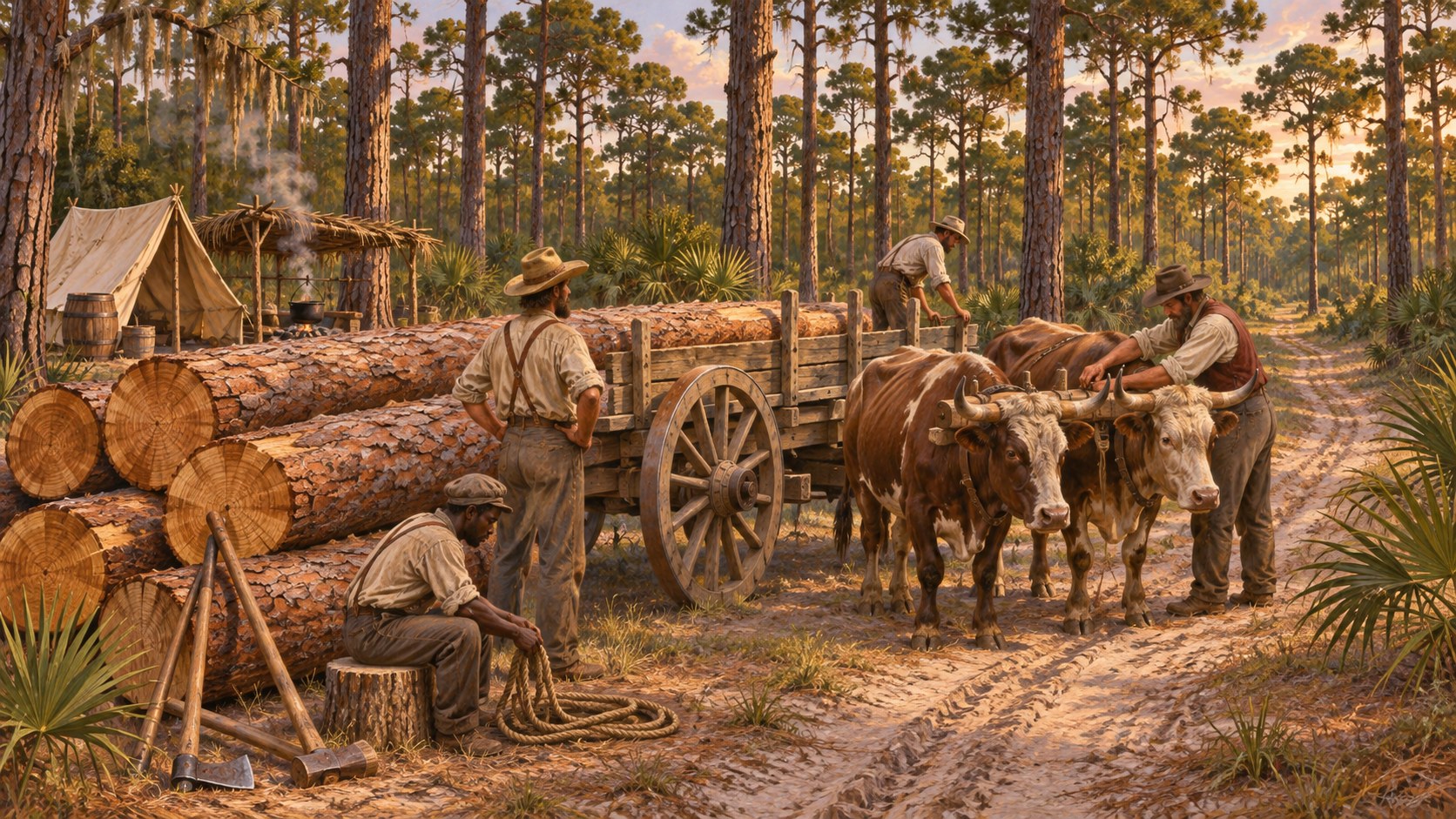
Before a tree ever became a board, it was tapped. In the heart of the pinewoods around the community, men spent their days opening V-shaped cuts in thick trunks to collect the heavy sap that ran slowly down. It was the hard work of the turpentine camps — a silent, rough economy in which resin became turpentine and rosin in rustic stills hidden in clearings, supplying shipyards and construction far beyond those woods.
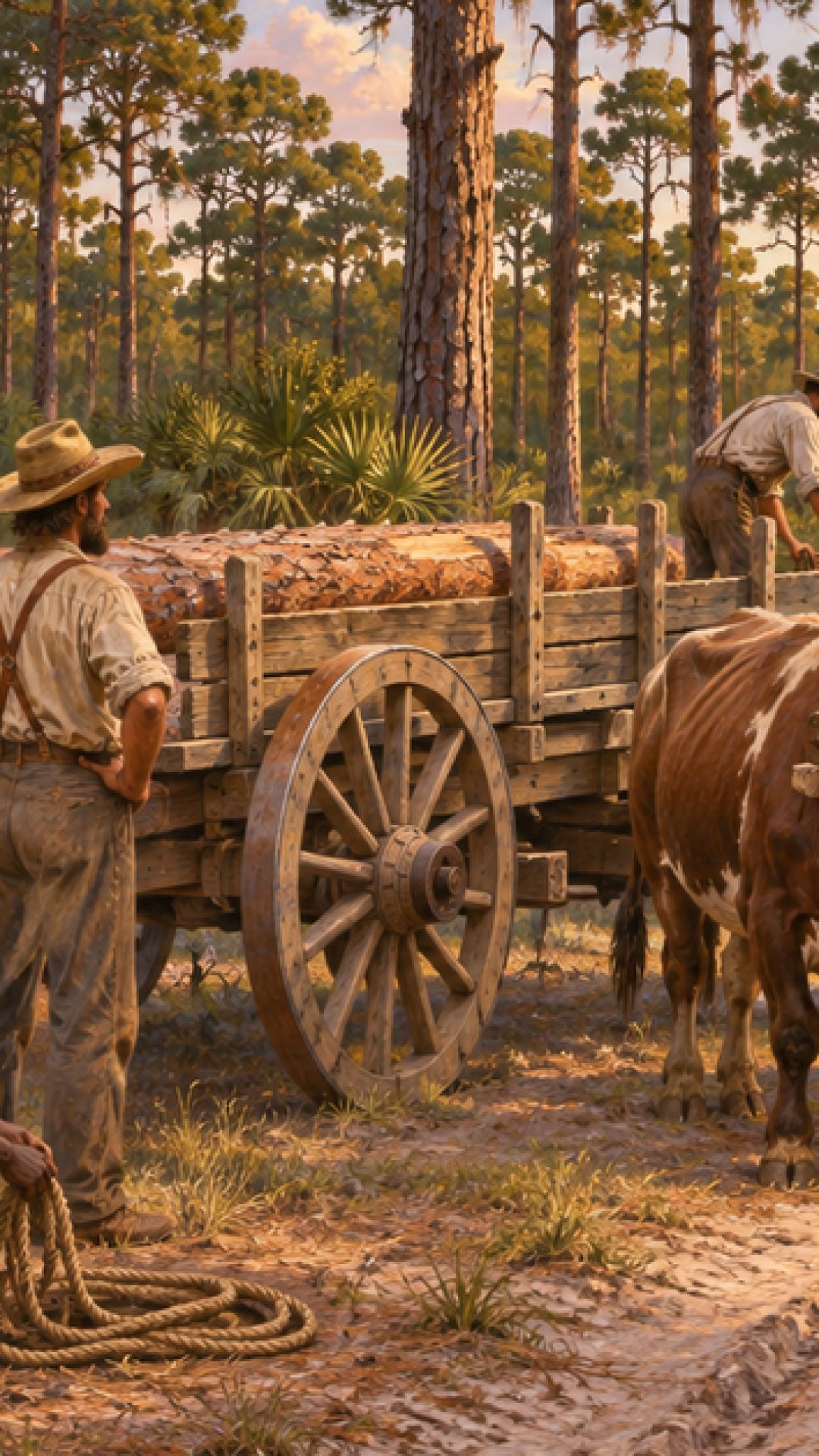
Right behind them came the cutting crews. With the arrival of the first rail lines in the region in the late 1880s, virgin timber in central Florida began to mean ready cash. The sound that echoed Monday through Saturday was not the chapel bell, but the dry crack of axes, the back-and-forth of two-man hand saws, and the shouts of teamsters guiding ox teams carrying immense logs to rail sidings and temporary tracks laid deeper into the woods — tram roads. It was work that hardened hands, filled clothes with soot, and kept men away from home for weeks.
The crack of the whip and the table made at home
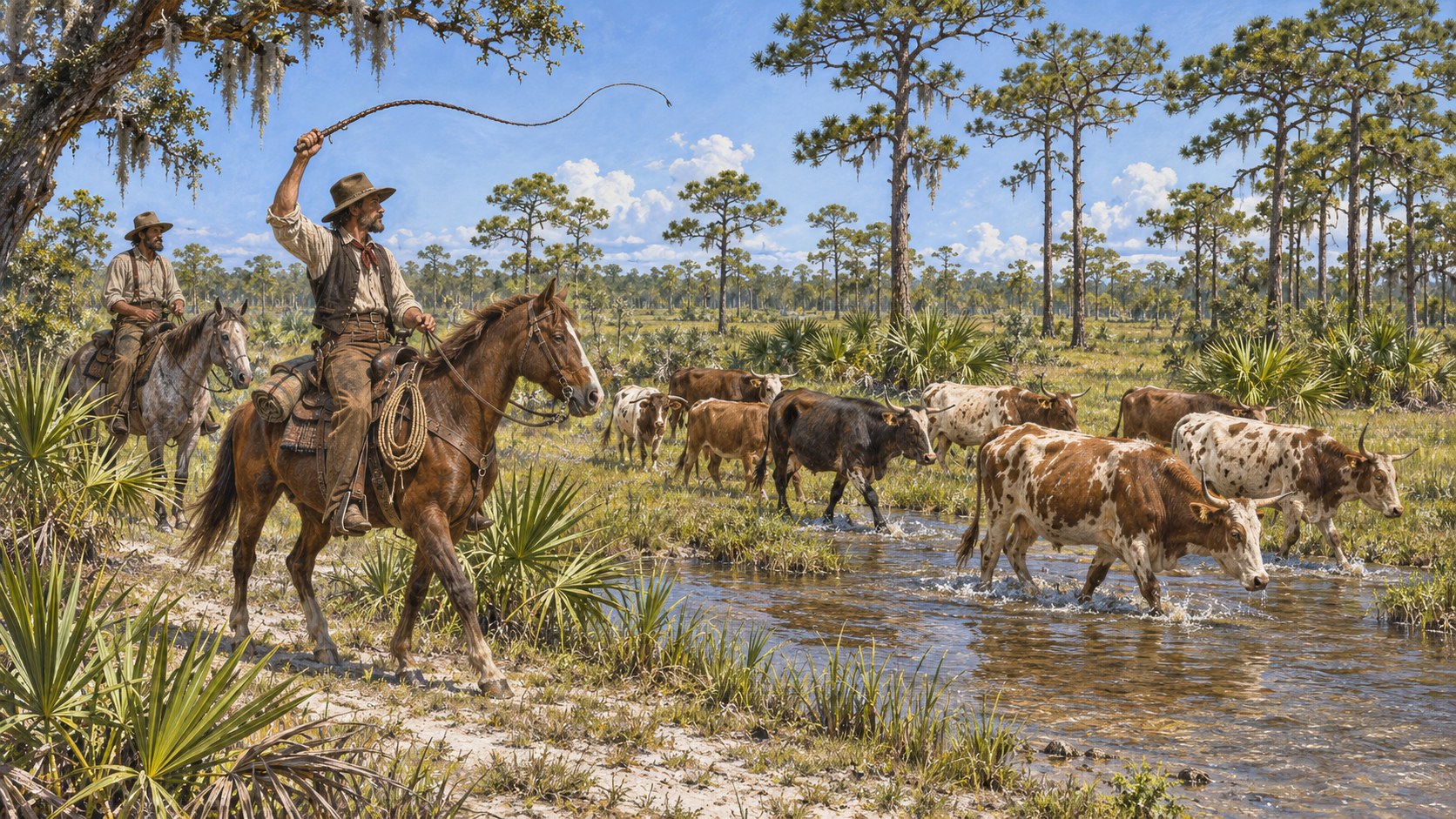
While some felled pines, others crossed the woods on horseback. At that time, there was no barbed wire dividing every piece of ground. Cattle ranged freely across the open country, among palmettos and creeks. Local ranchers — the Florida crackers, named for the sharp crack of their leather whips — knew every head of cattle by its brand and knew where the herd hid in the heat of midday. When it was time to gather the herd for market, they faced bogs, sudden storms, and entire days in the saddle.
Inside the homesteads, families kept daily life standing. Almost nothing came from outside, because fetching flour, salt, or coffee meant days of rattling travel by wagon to the nearest station. Food came from the yard itself: pounded corn, sweet potatoes pulled from soft soil, beans, cane ground by animal power into syrup, and salted meat kept in the pantry. When something was missing, they knocked on a neighbor's door. A sack of corn paid for a day of help raising a fence; a bucket of lard secured help at harvest. In that isolated land, a neighbor's word was worth more than any signed paper.
The sweet dream of orange trees
But something new was stealing sleep and lighting hope for those who lived there in the early 1890s: orange trees.
With trains connecting Florida's interior to the great cities of the North, golden fruit ceased to be merely a tree behind the house and became the greatest promise of wealth for that generation. On wooden porches and in conversations after Sunday worship, the same certainty traveled: anyone who could establish five acres of orange grove would never face hardship again.
Entire families believed it. They cleared sections of forest, dug out roots with hoes, buried their savings in young seedlings, and tended every tree as if it were the future of their children. The climate seemed friendly, the soil answered back, and the first green rows began to draw a new landscape around the community.
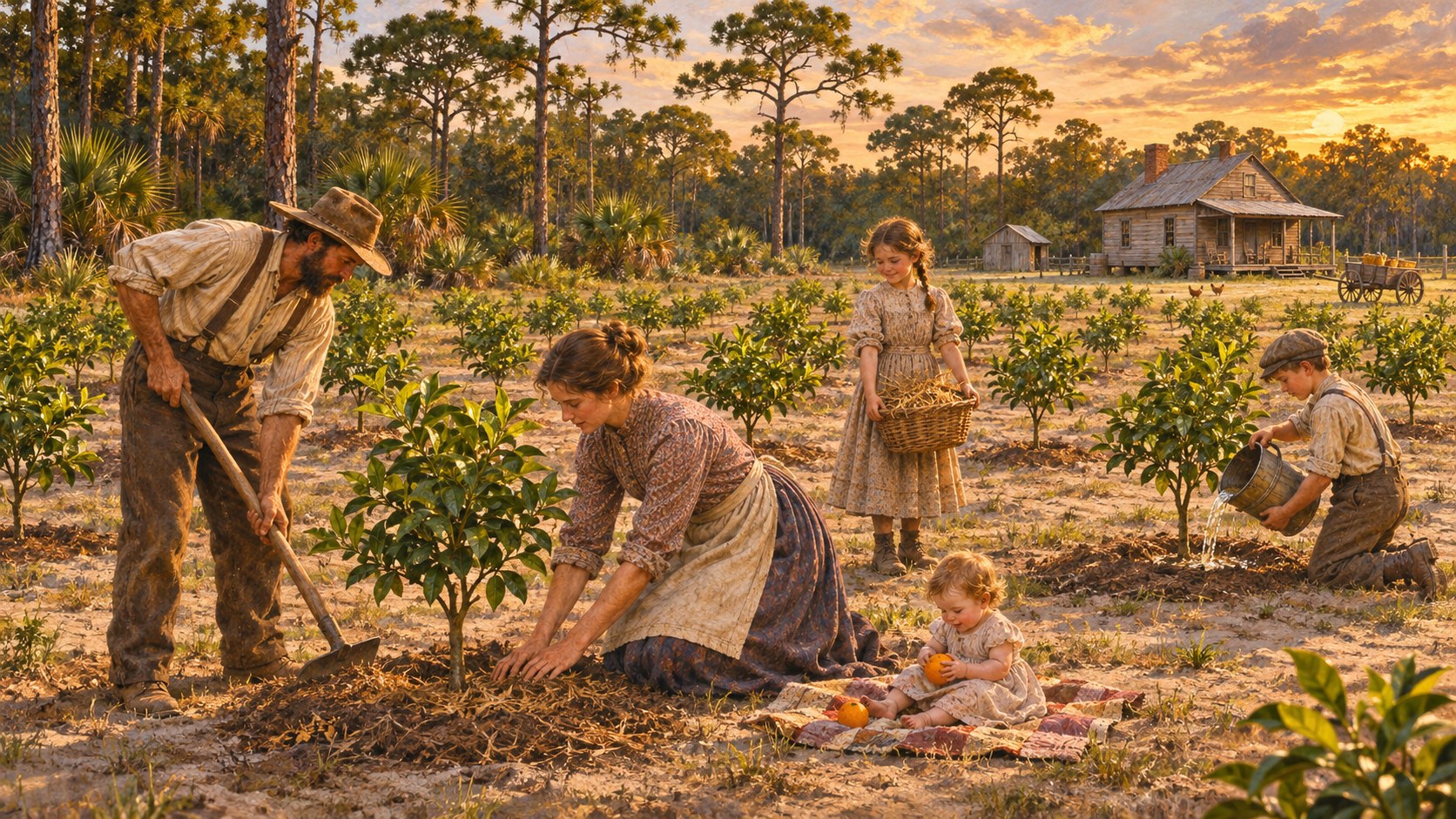
No one there, looking at those fruit-laden trees beneath Florida's mild sun, could have imagined that the sky was about to betray all that hope — and that the winters of December 1894 and February 1895 would bring a cutting wind capable of freezing oranges on the branches, splitting trunks in two, and testing to the limit the endurance of everyone who had bet everything on that land.
The Secret of Wesley Chapel is a work of fiction and Wesley Chapel Today’s Sunday story series. New episodes arrive every Sunday. The separate documentary series, based on researched records and verified sources, publishes new chapters on Wednesdays.