

WESLEY CHAPEL, FL — Every November, Wesley Chapel does the same dance. Grocery carts along State Road 54 get heavier, flights into Tampa fill up with aunts and cousins, and the first wave of out-of-town plates appears in parking lots. Most of us know exactly how to celebrate. Far fewer of us can explain, without the elementary-school version, why the holiday exists in the first place.
The short answer is that it did not begin as a national holiday.
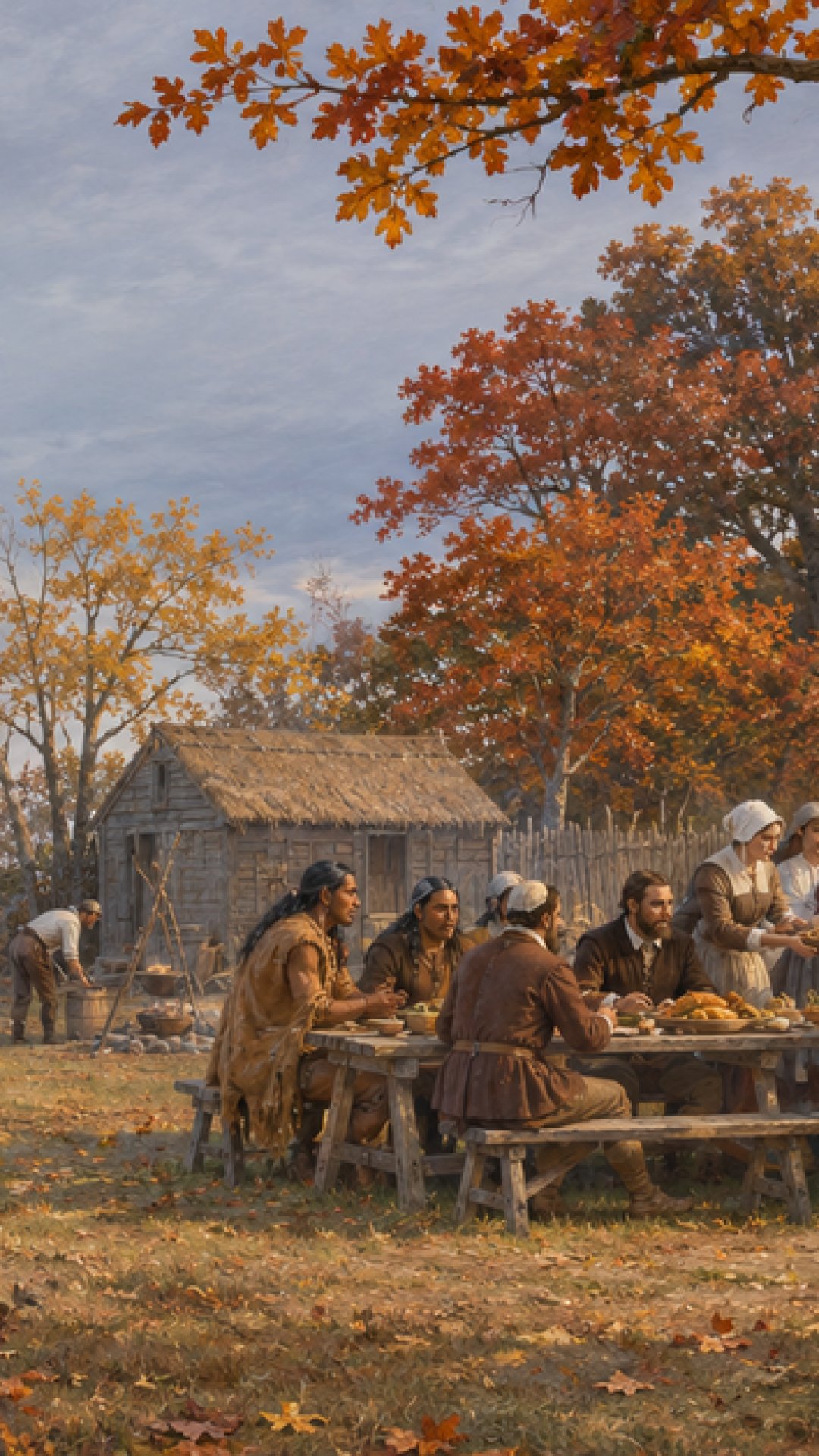
In the fall of 1621, 52 English colonists in Plymouth and at least 90 Wampanoag people spent three days together after the harvest. No one called it Thanksgiving. For the English, a “day of thanksgiving” more often meant prayer and fasting, not a feast. What happened that autumn was a harvest celebration and part of a careful diplomatic relationship.
The Wampanoag alliance, along with the assistance of Tisquantum—known as Squanto—became important to the settlers after their devastating first winter. The gathering was another step in a practical alliance between two communities navigating an uncertain future. The history that followed for Native nations was far more painful, and an honest telling has to hold both facts at once.
For the next two centuries, Thanksgiving remained local. Towns and colonies called their own days of prayer and gratitude after a good harvest, the end of a drought, or a major public event. There was no fixed date and no national expectation.
George Washington issued the first federal proclamation in 1789, naming Thursday, Nov. 26, as a day of public thanksgiving and prayer in the new republic. It was not yet an annual federal holiday; the country returned to its patchwork of local observances.
The holiday became a lasting national fixture in the middle of the Civil War. In October 1863, Abraham Lincoln declared the last Thursday in November a day of Thanksgiving and Praise. He hoped a shared ritual might give a fractured country something to hold onto. Behind the proclamation was a long campaign by Sarah Josepha Hale, editor of Godey’s Lady’s Book, who had urged presidents for years to establish a national Thanksgiving.
The modern date arrived only after a public argument. In 1939, November had five Thursdays. Franklin D. Roosevelt moved Thanksgiving up one week to lengthen the Christmas shopping season during the Depression. States split over the change; schools, businesses and football schedules faced two competing Thanksgiving dates. Newspapers called the dispute “Franksgiving.” Congress ended the confusion in 1941 by establishing the fourth Thursday in November as the federal holiday.
That is the unglamorous path the holiday took—from a harvest gathering in Massachusetts, through scattered local observances, a wartime call for unity and a presidential calendar dispute—before it settled into the November tradition many families now treat as automatic.
In Wesley Chapel, the turkey may come off a grill instead of an oven, and the table may include people who have only lived here a few years. Knowing the history underneath the meal does not change the menu. It simply makes the gathering a little less automatic—and a little more meaningful.
Sources: National Archives — Thanksgiving Historical Perspectives · National Archives — Congress Establishes Thanksgiving · Library of Congress — Thanksgiving