

WESLEY CHAPEL, FL — For fifteen years, Sarah Josepha Hale wrote letters. A lot of letters.
From her desk at Godey’s Lady’s Book — one of the most influential American magazines of the 19th century — she sent appeals to governors, diplomats, military commanders and presidents. Her goal sounded simple, almost domestic: have the entire country celebrate Thanksgiving on the same day.
Thanksgiving already existed, but it was a patchwork. Each state chose its own date or issued no proclamation at all. Hale believed the United States had too few truly shared rituals and needed an annual moment for gratitude, prayer and family gatherings.
Late November made sense. The harvest was over, elections had passed and much of the country was beginning to settle indoors for winter. Even so, earlier presidents resisted the idea. Their objection was constitutional: Thanksgiving dates were traditionally proclaimed by the states, not imposed by the federal government.
Someone else might have given up. Hale, already in her 70s, changed tactics.
If the president could not order every state to adopt one date, he could begin with what fell under federal authority: the District of Columbia, the territories, the Army, the Navy and Americans overseas. He could then invite governors to do the same.
It would not be an order from Washington. It would be a national example.
In the fall of 1863, the Civil War had split the country in two. Hale understood that her proposal was no longer only about a calendar. A shared Thanksgiving could become a symbol of a nation still struggling to recognize itself as one.
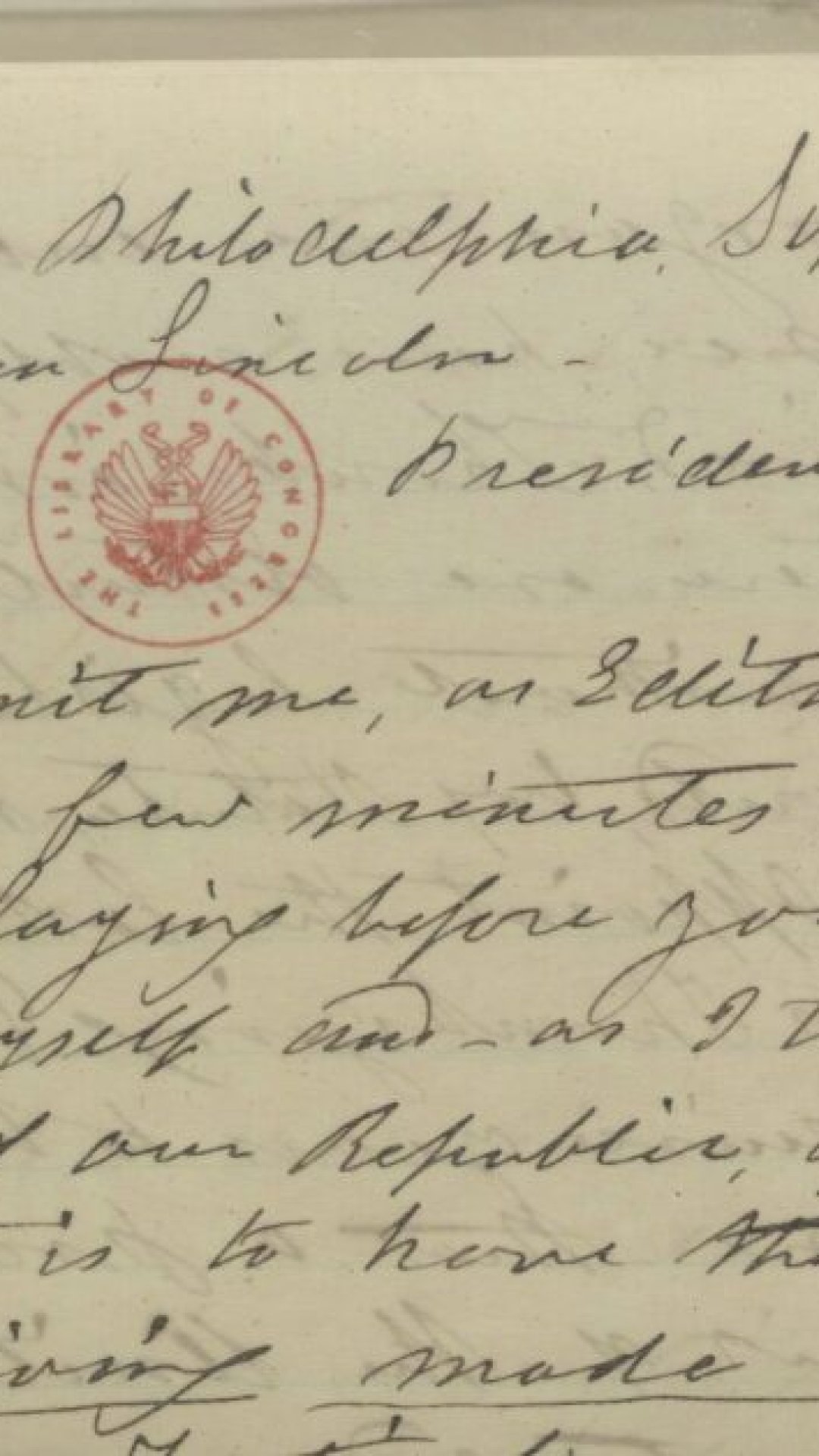
She also understood how power worked. In her Sept. 28 letter to Lincoln, Hale said she had already contacted William H. Seward, the secretary of state and one of the administration’s most influential figures. She asked the president to designate the last Thursday of November and called the celebration a great “Union Festival of America.”
Seward became the bridge between the campaign and the White House. A later account attributed to his family says he introduced the proposal to Lincoln with a pointed joke: since the federal government was already accused of taking states’ rights, it might also “take” the right to choose Thanksgiving Day. The line survives as a historical anecdote, not an official record of the meeting.
Seward’s documented role, however, is clear. He drafted the proclamation Lincoln signed.
On Oct. 3, 1863, only five days after Hale’s letter to the president, Lincoln invited Americans to observe the last Thursday of November as a day of “Thanksgiving and Praise.” The proclamation called for gratitude, but also for penitence, care for widows, orphans and other victims of the war, and divine intervention to “heal the wounds of the nation.”
The popular version of the story often reduces everything to a moving letter and an almost immediate presidential response. The documents reveal something more interesting: Hale spent years building support, devised a solution that respected the limits of federal power and chose the right political moment. Seward opened the door and turned the idea into the language of state. Lincoln recognized the proposal as a tool for national unity.
Hale contacted Seward again in 1864 to encourage the celebration’s continuation. The holiday became established through annual presidential proclamations; in 1941, Congress fixed its date as the fourth Thursday of November.
For Wesley Chapel families who now bring together traditions from different states and countries, that origin helps explain why Thanksgiving became more than a meal. Nationally, it was born as a deliberate attempt to make divided people pause, at least for one day, and recognize what they still shared.
Hale prepared the ground. Seward built the bridge. Lincoln turned the invitation into a tradition.
Sources: Library of Congress — Sarah Josepha Hale to Abraham Lincoln, Sept. 28, 1863 · National Archives — Abraham Lincoln’s Thanksgiving Proclamation, Oct. 3, 1863 · Library of Congress — “The Woman Who Helped Put Thanksgiving on the Calendar” · Library of Congress — “A Thanksgiving Hymn for Lincoln” · Library of Congress — Hale to Seward, Oct. 9, 1864