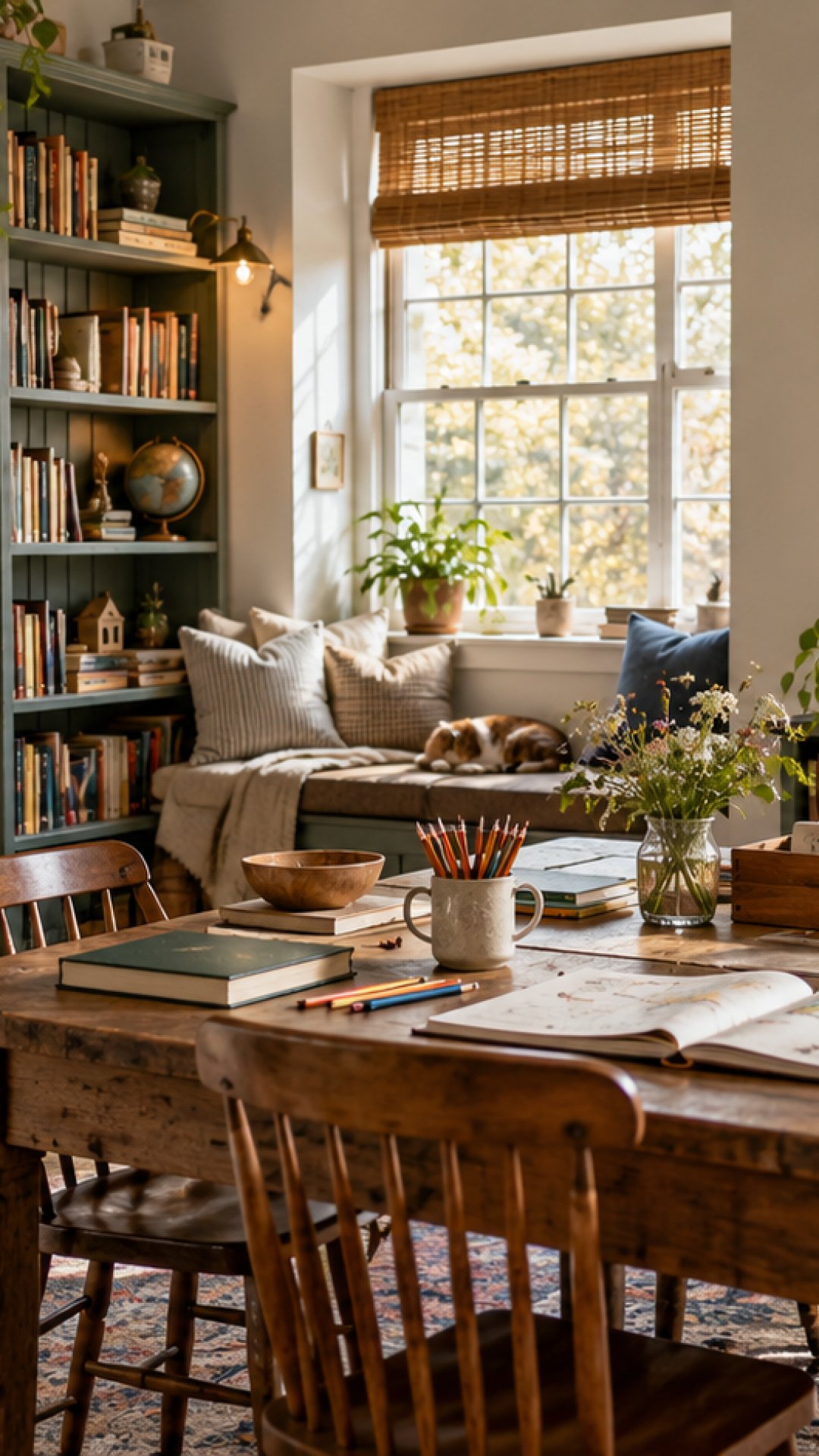

From traditional home education to Florida’s PEP scholarship and part-time public school classes, local families have more education options than many realize.
For families in Wesley Chapel, choosing where and how a child learns is no longer simply a decision between the neighborhood public school and a private school.
Homeschooling has become part of a much broader education landscape in Florida — one that can include parent-directed home education, scholarship-supported personalized education, virtual learning, and even taking selected classes at a Pasco County public school.
For parents considering a different path, the important question may not be whether homeschooling is “better” than traditional school.
It may be: Which educational setting works best for this particular child and family?
Homeschooling Is an Established Option in Florida
Florida defines home education as parent-directed, sequentially progressive instruction that satisfies the state's compulsory education requirement. Families using the traditional home education pathway register with their local school district.
For Wesley Chapel families, that means working with Pasco County Schools.
Parents establishing a traditional home education program generally must notify the district, maintain required educational records and materials, and provide an annual evaluation of the student's educational progress. Pasco County also explains that the portfolio must be preserved for two years.
That freedom therefore comes with responsibility: parents are taking a direct role not only in choosing how their child learns, but also in maintaining the documentation required for their educational pathway.
But “Homeschooling” Can Mean Different Things
One potentially confusing part of Florida's education-choice system is that families learning primarily outside a traditional school building may be participating under different legal structures.
The Personalized Education Program, or PEP, is one example.
PEP allows parents to direct their child's education while potentially receiving scholarship funds through an Education Savings Account for eligible educational expenses. However, Florida treats PEP and traditional home education as distinct pathways.
Traditional home education students register with their school district. PEP students instead work through an approved scholarship funding organization.
The accountability requirements also differ. PEP families must submit an annual Student Learning Plan and meet annual testing requirements, while traditional home education families follow the evaluation options established for home education under Florida law.
That distinction matters.
A family considering homeschooling should understand which pathway it is actually choosing, because registration, evaluations, funding and documentation requirements can be different.
Pasco Families Can Mix Home and Public-School Learning
There is another option that may surprise some Wesley Chapel parents.
Pasco County Schools operates a Flex Education Program that allows eligible home education and PEP students to participate in as many as three courses offered through Pasco County public schools, subject to course availability and school capacity.
Students may potentially take courses at their residentially zoned school and/or through Pasco eSchool.
That creates possibilities beyond the traditional image of homeschooling as a child learning exclusively at the kitchen table.
A family might direct most learning at home while using outside classes, online instruction, tutoring, extracurricular activities or selected public-school courses to build an education around the student's needs.
For the 2026–27 school year, Pasco says full-year Flex registration has closed, but registration for second-semester courses is expected to open in November.
Why Families Consider It
Families choose home-based education for many different reasons.
Some want greater flexibility in the daily schedule. Others want more control over curriculum or the ability to move faster or slower in individual subjects. A child involved heavily in athletics, arts or another demanding activity may benefit from a schedule that is difficult to reproduce in a conventional school day.
A recent Florida Department of Education feature highlighted a home-educated family using education-choice scholarship funds for curriculum, tutoring and athletic-related expenses while accommodating demanding competitive sports schedules. That family's experience is one example rather than a prescription for other parents, but it illustrates how personalized education can look very different from a conventional school schedule.
Other families may find that a traditional public, charter or private school provides exactly the structure, community and services their child needs.
And that is an important part of the conversation.
The Choice Is About the Child
Homeschooling requires time, organization and significant involvement from parents or guardians. Flexibility does not eliminate the work involved in educating a child — it changes who organizes much of that work.
Traditional schools provide built-in schedules, teachers, facilities, classmates and established programs. Home education can give families more control over pace, curriculum and scheduling, but places more responsibility directly on the family.
Neither description answers the question for every child.
The useful question is more personal:
Where does this child learn well?
For one family, the answer may be the neighborhood public school.
For another, it may be a charter or private school.
And for another, it may be home education, PEP or a combination of home learning and outside classes.
A Growing Menu of Choices
Pasco County itself presents families with multiple school-choice options, including magnet programs, career and technical programs, charter schools, Pasco eSchool and home education.
For Wesley Chapel parents, understanding those choices may be more valuable than trying to identify one educational model as universally superior.
Education is ultimately personal.
And increasingly in Florida, families have the ability — and the responsibility — to decide what that education should look like for their children.
Wesley Chapel Today · Choices
Families considering home education should verify current requirements directly with Pasco County Schools and the Florida Department of Education before making enrollment or scholarship decisions.