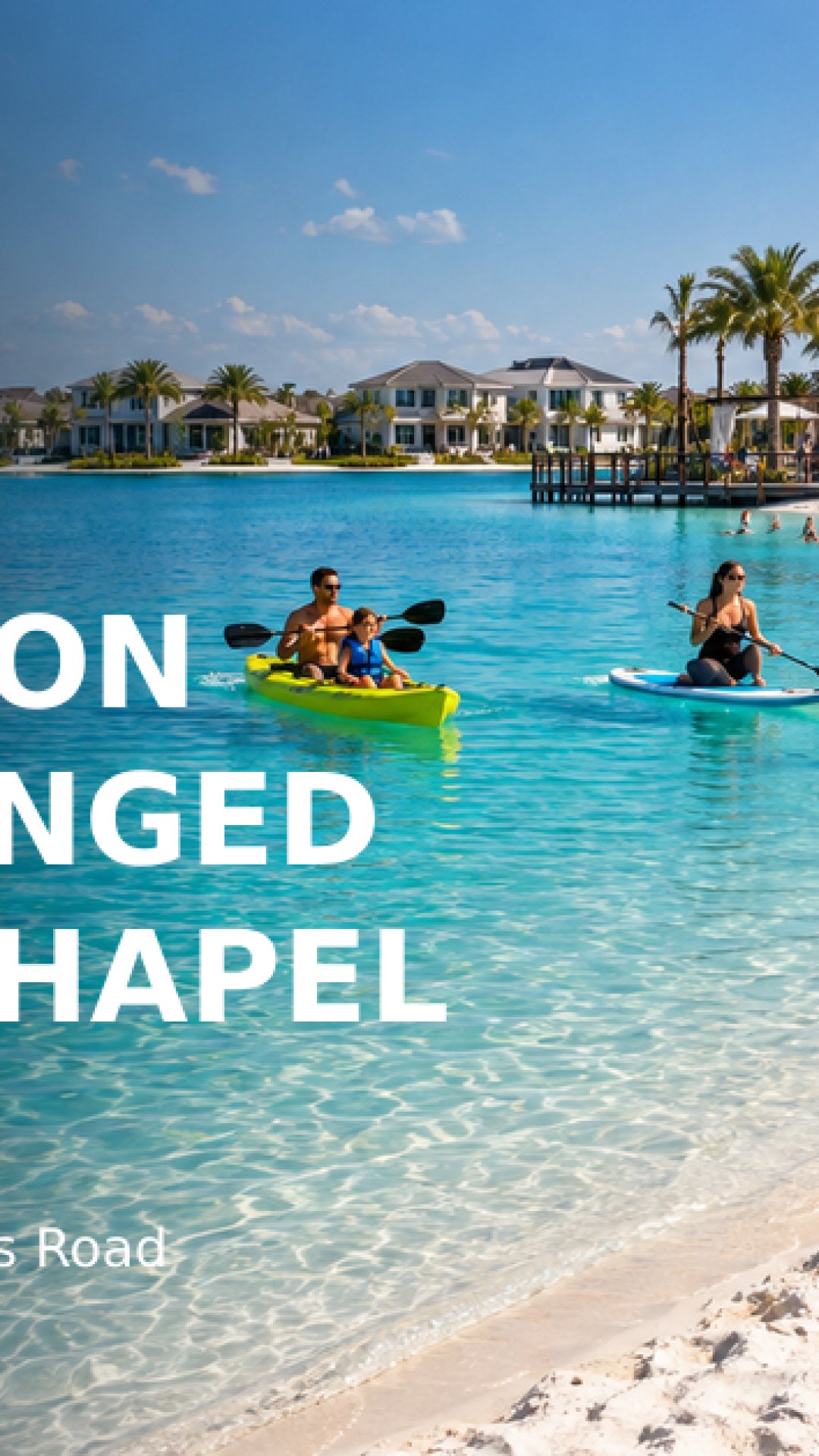


Before Epperson opened its lagoon, a neighborhood amenity usually meant a pool, a clubhouse and perhaps a playground. Epperson changed the scale of that conversation. Its clear blue water and white sand became the centerpiece of the community, not a feature hidden behind the sales office.
Opened in 2018, Epperson became the first U.S. project powered by Crystal Lagoons technology. The 7.36-acre water feature sits within a 900-acre master-planned community at 31885 Overpass Road. The broader plan calls for roughly 3,000 homes when completed.
Graphic summary based on the sources cited below.
The lagoon offers swimming, white-sand beaches, a water slide, obstacle courses, volleyball, kayaks and paddleboards. It serves residents and also offers public access through day passes and scheduled programs. That combination turned a private residential amenity into a regional attraction without moving it out of the neighborhood.
The model influenced development beyond Epperson. Metro Development Group later opened the larger Mirada lagoon north of Wesley Chapel in San Antonio, and other lagoon communities have appeared elsewhere in Florida. Epperson remains the Wesley Chapel original; Mirada is nearby, but it is not another Wesley Chapel neighborhood.
Graphic summary based on the sources cited below.
Why does the idea attract buyers? It makes the neighborhood feel like a destination before a person leaves home. Families can build weekends around the water, and the lagoon creates an identity that is easy to understand in one photograph. In a market full of new subdivisions, that distinction is powerful.
The practical side still matters. A lagoon does not shorten a commute, choose a school or erase housing and community fees. Buyers should compare the full monthly cost, access rules, guest policies and location with the same attention they give the beach. Blue water is persuasive; the budget deserves equal sunlight.
Graphic summary based on the sources cited below.
Epperson’s larger impact is not simply that Wesley Chapel gained a place to swim. It showed developers that an amenity could become the organizing idea of an entire community. The lagoon sold a lifestyle, neighboring projects copied the strategy, and a former ranch area became recognizable far beyond Pasco County.