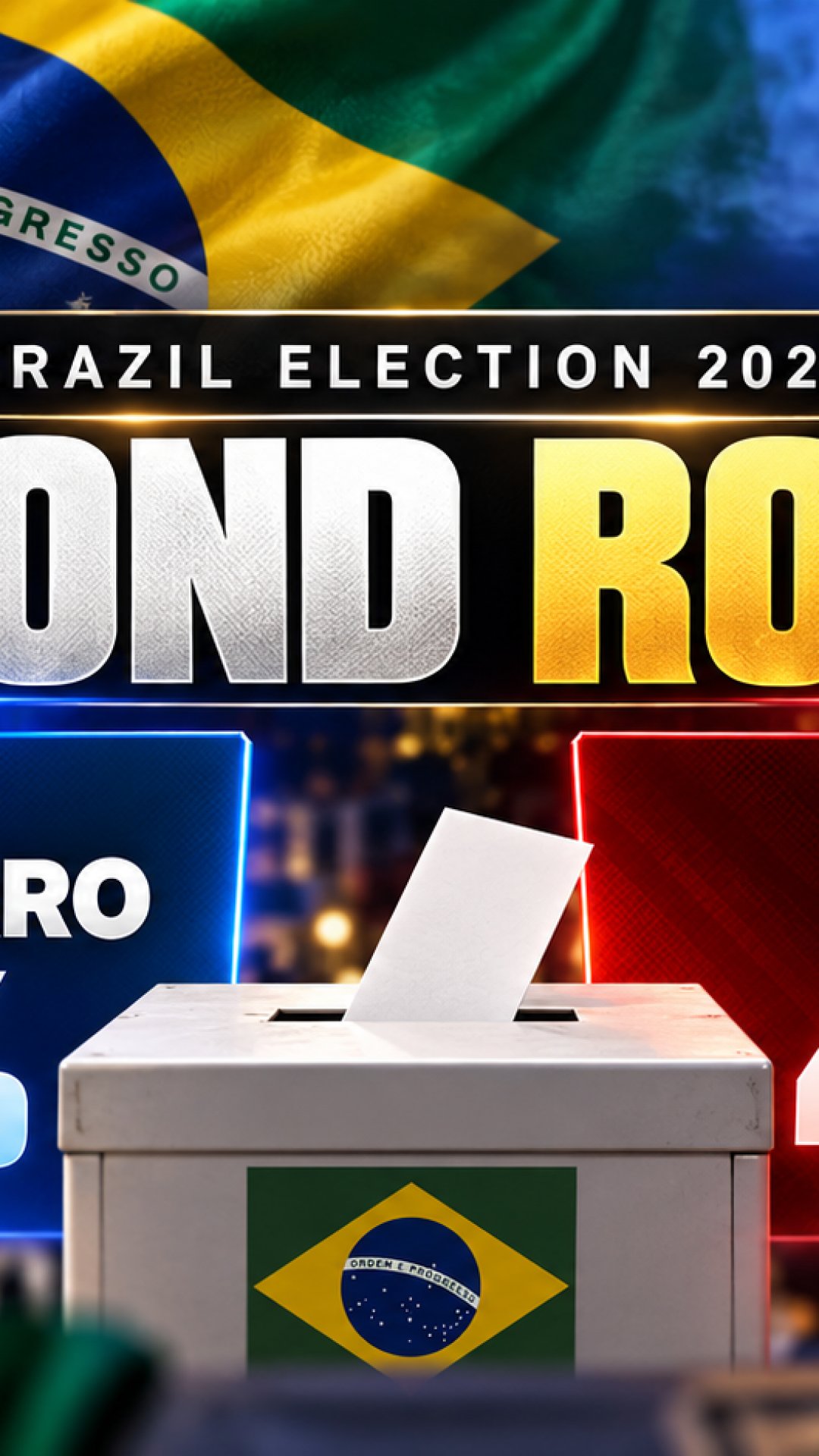


Flavio Bolsonaro finished ahead in Brazil's first-round presidential vote, but neither candidate crossed the 50 percent threshold, setting up an October 25 runoff against Lula.
BRASILIA, Brazil - Brazil's presidential election is heading to a second round after no candidate received more than half of valid votes in the first round.
Flavio Bolsonaro finished ahead with 47 percent of the vote, followed by Lula with 45 percent. Because neither candidate reached the majority needed to win outright, the race now moves into a direct runoff between the two candidates on October 25.
The result immediately shifts Brazil's national campaign into a head-to-head contest. For Brazilian communities abroad, including residents in Wesley Chapel and the greater Tampa Bay area, the election remains active and will continue to draw attention in the weeks leading up to the second round.
What Happened
Brazil uses a two-round system for presidential elections. If no candidate receives more than 50 percent of valid votes in the first round, the top two candidates advance to a runoff.
That is now the path for this election. Bolsonaro enters the second round in first place, while Lula advances as the other finalist. The campaign will now narrow from a broader first-round field to a direct dispute over who will lead Brazil in the next presidential term.
Why It Matters Locally
Wesley Chapel has a visible Brazilian community, with families, business owners and residents who continue to follow political and economic developments in Brazil closely.
For Brazilian citizens living abroad, presidential elections are especially important because overseas voters cast ballots for president and vice president. The second round, scheduled for October 25, means eligible voters outside Brazil will have another opportunity to participate, depending on their registration status and official voting location.
For local readers who are not voting, the result still matters as a major international story with direct cultural and family connections across the Brazilian community in Florida.
The Race Ahead
The runoff is expected to focus on the economy, public safety, democratic institutions, foreign policy and the direction of Brazil's government over the next four years.
Bolsonaro begins the second round with a narrow first-round lead. Lula, meanwhile, enters the runoff close behind and will likely work to consolidate voters who supported other candidates in the first round.
Wesley Chapel Today will continue following the official results, campaign developments and practical information for Brazilian residents in the area as the second round approaches.
Key Numbers
Flavio Bolsonaro: 47 percent
Lula: 45 percent
Result: second round
Next step: runoff election on October 25
How Close Is the Runoff?
Based on first-round results and public analysis available after the vote, the runoff starts as a very close race with a slight initial advantage for Bolsonaro.
Bolsonaro starts with a first-round lead of about two points.
Recent head-to-head polling cited by Brazilian media showed the two candidates essentially tied in a runoff scenario.
Analysts quoted in international coverage described Bolsonaro's first-round result as a sign of strong conservative momentum, but also warned that some of his support may already have been pulled forward in the first round.
Turnout, abstention and the behavior of voters who backed other candidates will likely decide the second round.
In plain English: Bolsonaro begins slightly ahead, but this is not a safe lead. Lula remains close enough that endorsements, turnout and campaign mistakes could change the race quickly.
Sources
Official results and second-round voting information should be checked against Brazil's Superior Electoral Court before publication:
Tribunal Superior Eleitoral results portal: https://resultados.tse.jus.br/
Tribunal Superior Eleitoral official website: https://www.tse.jus.br/